
 Nicolai Haugsted

Moscow prepares for extended confrontation with Western powers.

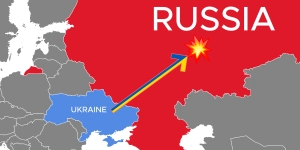
Global geopolitics continues to feel the heavy strain of prolonged military conflict, with national treasuries around the globe adapting to long-term defense requirements.
Russian state planning has now formally aligned its financial roadmap with sustained war spending for years to come. President Vladimir Putin confirmed on Monday that military expenditure will remain the primary focus in state budget planning over the next three years.
Speaking at a meeting with deputies from the 8th State Duma following the conclusion of their session on July 27, Russia’s leader addressed both foreign pressures and domestic priorities.
Strategic Commitments in Moscow
During his address, Putin accused Western nations of unleashing a “Russophobic machine” and setting “world records” for international sanctions. He insisted that “no one will ever” succeed in attempting to “break the people of Russia.”


Outlining the structural stability of the state, Putin emphasized its institutional readiness.
“Our political system and institutions of power are formed on sovereign principles in full compliance with the Constitution of the Russian Federation and are ready to defend the country, capable, together with society, of decisively repelling any hostile step,” Putin stated according to The Moscow Times.
Alongside “strengthening the country’s defense,” he noted that future fiscal planning for 2027–2029 must additionally address “urgent social issues.”
Escalating Costs on the Frontline
Official projections previously set national defense allocations at 12.9 trillion rubles within the 2026 budget framework. Insiders familiar with the situation informed Bloomberg in June that actual military outlays are projected to surpass initial targets by 4 to 5 trillion rubles. Reports indicate that the Ministry of Finance is preparing cuts to civilian spending to absorb total war costs, alongside plans to raise 2 to 3 trillion rubles in additional debt.
Calculations by Janis Kluge, a researcher at the German Institute for International and Security Affairs, reveal that actual expenditures linked to the conflict reached 5.9 trillion rubles by the end of the first quarter, drawing on Finance Ministry figures. Compared to the same timeframe last year, spending on the military and weapons manufacturing surged by 29.9 percent.
Growth figures reach 68.7 percent when contrasted with January–March 2024, 129 percent compared to 2023, and 4.6 times the level recorded in the first quarter of 2022. Cumulatively, Kluge estimates that military actions in Ukraine have cost Russian taxpayers 53.079 trillion rubles—or approximately $746.6 billion—since 2022. Expressed in civilian terms, such funding equals 28 years of current healthcare spending, 30 years of education allocations, or 100 years of annual budgets for major federal regions like Krasnoyarsk Krai or Sverdlovsk Oblast.
Mounting Pressure on Public Finances
Prioritizing defense and security forces fiscal authorities to become “more selective” across remaining funding categories, according to Emil Ablaev, a leading analyst at the Center for Macroeconomic Analysis and Short-Term Forecasting (CMASF). Available options for boosting revenue through continuous tax increases are shrinking rapidly, Ablaev observed.
Despite increases in corporate profit taxes and recycling fees last year, total revenues fell 3 trillion rubles short of targets. Fiscal challenges have intensified this year, as the Finance Ministry raised VAT to 22 percent while first-half deficits neared 6 trillion rubles. Unfunded gaps in state coffers could expand to 7 trillion rubles by year-end, according to expert forecasts.



