Jens Asbjørn Bøgen
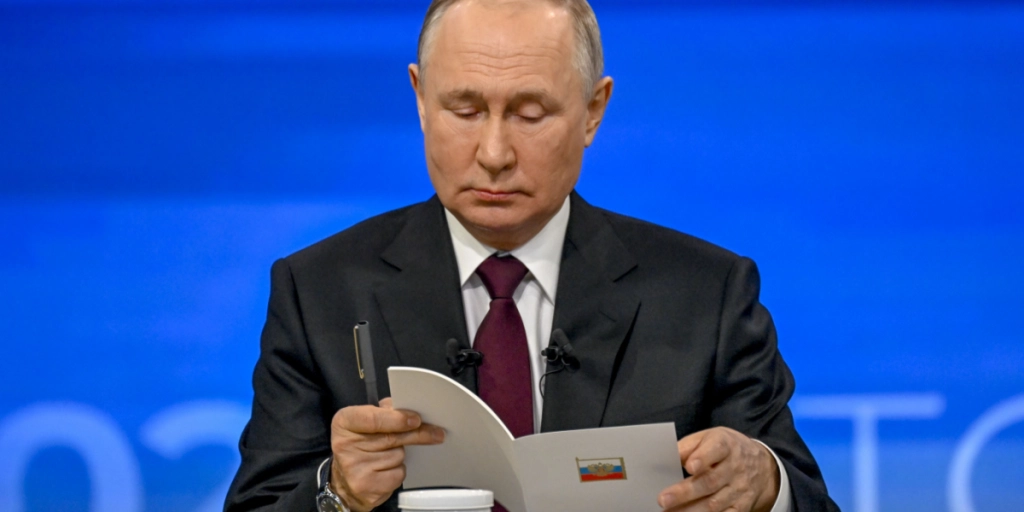
You’d think the Russian leader would be hesitant considering how it ended with Wagner.


The Wagner Group. A name so closely affiliated with the initial stages of the Russian invasion of Ukraine that some argued the private military company (PMC) was more important to the Russian campaign than the actual Russian army.
The group is especially known for the Battle of Bakhmut, where at least 20,000 Wagner fighters were killed, according to the then leader of the PMC, Yevgeny Prigozhin.
Half of that number were former prisoners recruited from Russian prisons.
Following the Battle of Bakhmut, Prigozhin started criticizing the Kremlin, eventually launching a campaign to reach Moscow in an attempt at rebellion. It was eventually stopped through diplomacy, and in June 2023, he was killed under suspicious circumstances in a plane crash.


Following all of that, you might think that Putin has had enough of PMCs, but a new law just signed by the Russian leader suggests otherwise.
PMCs for protection in Russia
According to the Institute for the Study of War (ISW), Putin approved legislation allowing certain private military companies and related security groups to access combat-grade small arms and ammunition on March 23.
According to the measure, Rosgvardia (the National Guard of Russia) will supply these weapons to help defend critical infrastructure during what Moscow calls the “special military operation” in Ukraine.
The law applies to PMCs tied to energy firms, state corporations, and other strategic enterprises responsible for safeguarding essential facilities.
Approval process
According to the ISW, under the new rules, companies must formally request weapons from Rosgvardia. Each request will then require clearance from the regional directorate of the Federal Security Service (FSB).
Officials say the framework is designed to coordinate security responses more tightly as drone threats increase.
Vasily Piskarev, who heads the State Duma Committee on Security and Anti-Corruption, said such companies already guard more than 80 percent of Russia’s fuel and energy infrastructure.
Previously outgunned
Despite their widespread role, these units have until now relied on weapons seen as inadequate against modern unmanned threats, the ISW notes.
These include unmanned aerial vehicles as well as surface, underwater, and ground-based drones, which have become more prominent in the conflict.
ISW suggests the law responds in part to long-standing criticism from pro-Kremlin military bloggers over insufficient protection of key infrastructure.
Broader preparations
The move follows earlier steps by the Kremlin to strengthen domestic defence capacity. In autumn 2025, authorities mandated special training for active reservists tasked with protecting infrastructure.
The Institute for the Study of War has assessed that such measures may indicate preparations for limited, potentially involuntary reserve mobilisations in the future.
Together, these developments point to a widening security role for both private and reserve forces inside Russia.
Sources: Institute for the Study of War (ISW)