
 Kathrine Frich
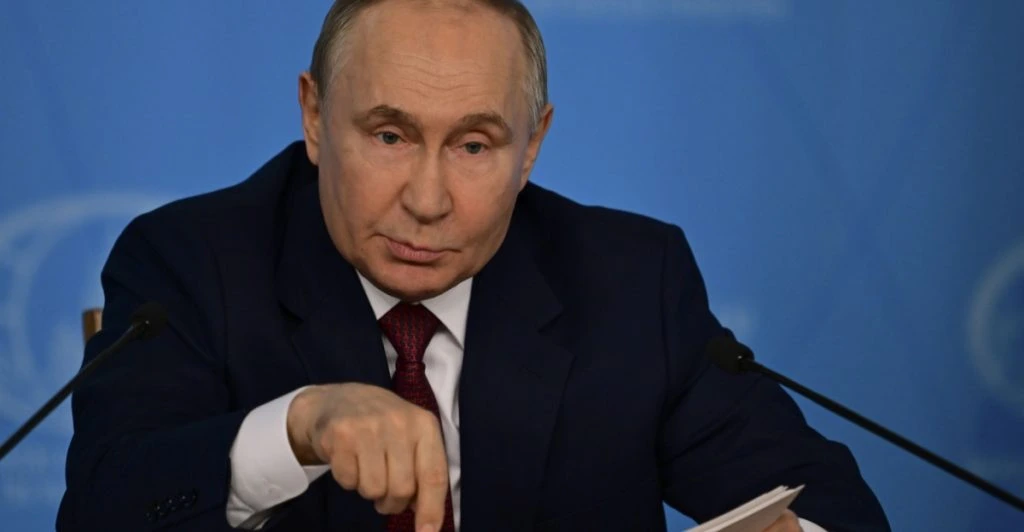
Russia has repeatedly presented battlefield updates as signs of momentum.


But independent assessments suggest a gap between official statements and the situation on the ground.
Fresh analysis is now raising doubts about how those claims are being framed at the highest levels.
Inflated claims
According to an analysis by the Institute for the Study of War (ISW) cited by Ziare, Russian Chief of the General Staff Valery Gerasimov has overstated recent battlefield gains.
On March 16, he said Russian forces had captured 12 settlements in the first half of March.


However, ISW reported that only two of those claims could be verified based on available data.
Reality on ground
The analysis found that in several locations in Donetsk and Zaporizhzhia, Russian forces either had only a limited presence or had not entered the areas at all.
Some villages cited as “captured” were only partially controlled, while others remained outside Russian reach.
This discrepancy suggests a significant gap between official reporting and actual territorial control.
Repeated narratives
ISW also noted that some statements presented as new developments were in fact recycled from earlier briefings.
Gerasimov again claimed Russian control over more than half of the city of Liman, a statement previously made in December.
According to analysts, Ukrainian forces have since regained ground in that area.
Contradicting data
Further claims about control of the city of Kostiantynivka were also challenged.
While Gerasimov said Russian forces held more than 60% of the city, independent estimates place their presence at less than 10%, according to ISW.
In the Zaporizhzhia region, he described Russian forces as maintaining the initiative, despite reports that Ukraine had regained more than 400 square kilometers between late January and mid-March.
Shaping perception
ISW said such statements may be part of a broader strategy to shape perceptions of the war.
Exaggerating progress could be aimed at influencing domestic audiences, Ukraine and Western allies by suggesting steady advances.
The analysis also pointed to messaging around a proposed “buffer zone” near border areas, which it described as limited in scope despite being presented as significant.
A stable front
Despite the claims, the report concluded that the front line remains largely unchanged.
It also noted that Ukraine regained more territory in February 2026 than Russia captured during the same period.
Analysts added that such discrepancies are not new, with previous Russian claims later contradicted, sometimes even by sources close to the Kremlin.
They suggested that these briefings may also serve to reinforce a particular narrative within Russia’s leadership, where updates are closely followed by President Vladimir Putin.
Sources: Ziare.com, Institute for the Study of War (ISW)



