
 Edith Hejberg

The peace effort is built around a 20-point plan overseen by Donald Trump’s newly assembled Board of Peace.


Progress on the Gaza peace plan has ground to a halt over a central question: how and when Hamas should disarm.
Israel has warned it could return to full-scale war if the condition is not met quickly.
Experts say Hamas is almost certain to reject the version of the plan described in the Israeli press.
At the heart of the impasse is a lack of clarity over guarantees, sequencing and enforcement.
Phase two meant to reshape Gaza

The second phase of the US-brokered ceasefire was declared under way in January.
It envisioned Hamas laying down its weapons, Israeli forces withdrawing, and a Palestinian interim administration taking control.
A Palestinian police force and a 20,000-strong international stabilisation force (ISF) were also part of the blueprint.
But while the framework looked ambitious on paper, the details were left vague.
A 20-point plan with few answers

The peace effort is built around a 20-point plan overseen by Donald Trump’s newly assembled Board of Peace.
Yet the document offers little guidance on the order of steps.
That ambiguity has opened the door to competing interpretations.
Israel is pressing for complete disarmament of Hamas as the first move.
Ultimatum talk from Israeli leaders

Israeli officials have briefed journalists that Washington may soon impose a 60-day deadline.
“It is estimated that, in the coming days, Hamas will be given an ultimatum to disarm and fully demilitarise Gaza,” the far-right finance minister, Bezalel Smotrich, told public radio.


He added that the demand would come directly from Washington.
According to Smotrich, failure to comply would give the Israel Defense Forces “international legitimacy and American backing to do it itself”.
Trump’s silence fuels uncertainty

Foreign minister Gideon Saar reportedly told Israel’s security cabinet that Trump would deliver his ultimatum within days.
Yet the US president did not mention the issue in his State of the Union address.
He claimed credit for the return of Israeli hostages’ bodies.
The Board of Peace, hailed days earlier as historic, went unmentioned.
Who would take Hamas’s weapons?

Even if a deadline were set, it is unclear who would collect and control Hamas’s arms.
The National Committee for the Administration of Gaza (NCAG), a group of 15 independent Palestinian technocrats, has been meeting in Cairo.
It is preparing to govern Gaza but remains far from deploying on the ground.
Without security arrangements and funding, it cannot yet operate inside the territory.
A six-month disarmament proposal
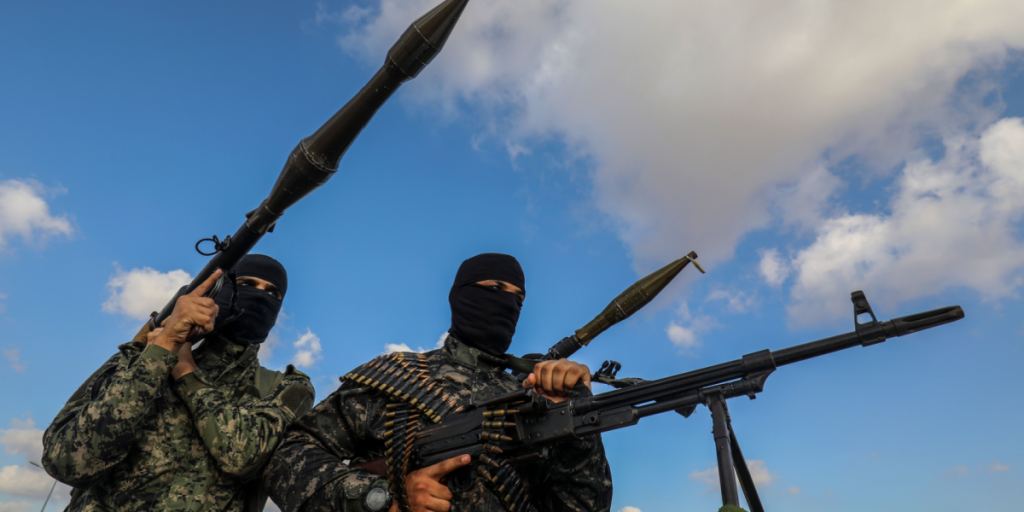
Israel Hayom reported that the NCAG would present Hamas with a six-month disarmament plan in March.
The process would begin with heavy weapons and end with light firearms.
Hamas would first submit an inventory of its arsenal and maps of its tunnel network.
Other militias would only be disarmed after Hamas, and every step would depend on its compliance.
Doubts over readiness and capacity
Analysts question whether the infrastructure exists to enforce such a plan.
A new police force is being trained in Jordan and Egypt, but numbers are seen as too low for Gaza’s 2.2 million people.
Israel has vetoed recruits who served under Hamas rule.
“It seems more wishful thinking than a serious plan,” said Michael Milshtein of Tel Aviv University.
International force still undefined

Several countries, including Indonesia, Morocco and Kazakhstan, have offered troops for the planned ISF.
Preparations are under way for barracks in southern Gaza.
Yet the force’s mandate has not been agreed.
Contributing nations do not want their soldiers tasked with seizing Hamas’s weapons.
Hamas unlikely to accept current terms
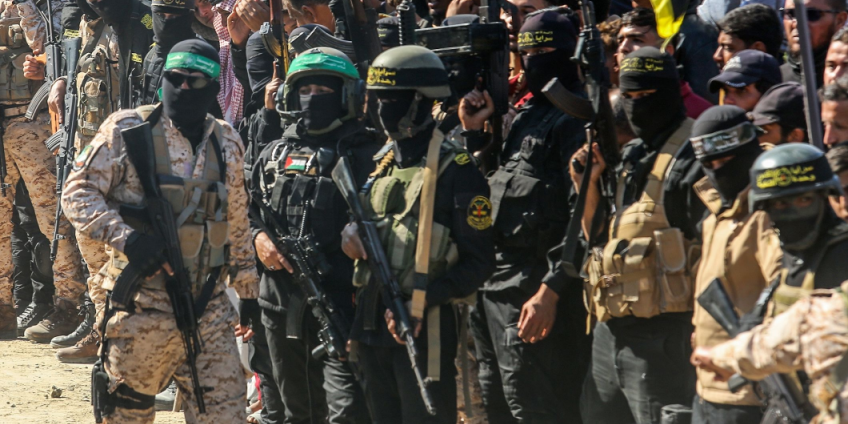
Analysts say the reported terms would be swiftly rejected.
“The details in the Israel Hayom report would be promptly rejected by Hamas,” said Muhammad Shehada of the European Council on Foreign Relations.
He argued Hamas might accept freezing or decommissioning offensive weapons while retaining light arms.
“The light weapons would be under a strict policy of no use, no public display; anyone showing a gun in public would be arrested by NCAG’s police,” Shehada added.
Regional powers divided on the path forward

Egypt and Saudi Arabia are said to favour a phased model similar to Northern Ireland’s peace process.
That approach would involve disarming all paramilitary groups under independent supervision.
The United Arab Emirates, however, reportedly backs Israel’s demand for full disarmament first.
Shehada warned this stance risks collapsing the entire plan.
Fears of a return to war
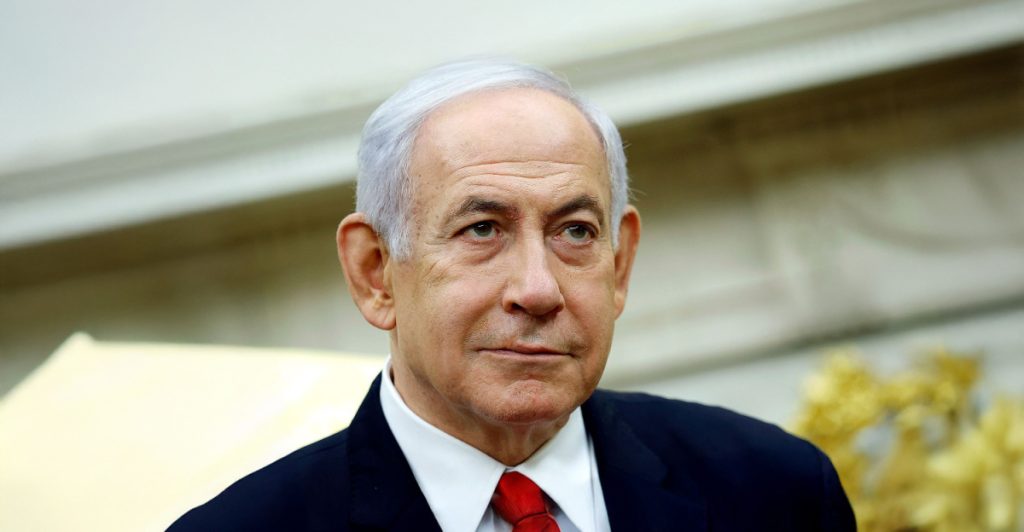
“Netanyahu is doing everything he can to collapse phase two and resume military operations,” Shehada said.
He suggested maximalist demands could push Hamas into rejection, clearing the way for renewed conflict.
Hamas leaders reportedly believe Israel intends to reinvade, reinforcing their resolve to keep their weapons.
The Times of Israel cited a message urging the group to be “ready to fight the IDF again, as it is convinced that Israel is going to reinvade Hamas-held areas”.
A fragile plan on the brink
Some Israeli officials appear resigned to the failure of disarmament.
Smotrich said: “In the end, Israel will occupy the Gaza Strip, implement a military government and establish Jewish settlements there. It doesn’t matter if it happens in a year, two years, or three years.”
HA Hellyer of the Royal United Services Institute warned the structure of the plan invites collapse.
“The process is made to depend on Hamas disarming; otherwise, everything else is temporarily held up, until Israel decides to return to full-scale war,” he wrote. “This isn’t a situation that lends itself to positive outcomes.”



