Kenneth Glad
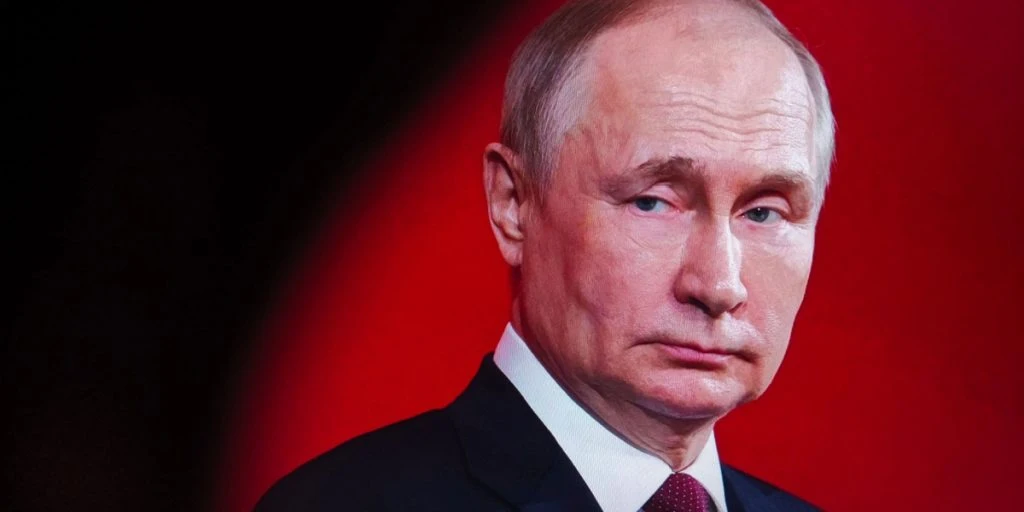
A prominent ideological voice in Moscow has publicly questioned the country’s strategic posture amid escalating global tensions. His remarks add to growing debate over how the Kremlin should respond to Western military assertiveness.

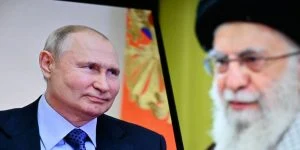
Russia moved swiftly to denounce the killing of Iran’s supreme leader, framing it as a watershed moment in international affairs.
But as the Kremlin issued formal condolences, a prominent nationalist thinker associated with Russian hardline circles used the crisis to press for a far more confrontational course.
Kremlin response to Khamenei’s death
On Sunday, President Vladimir Putin condemned the killing of Iran’s Supreme Leader Ayatollah Ali Khamenei and members of his family, calling it a violation of international law and basic morality. According to Reuters, the message was sent to Iranian President Masoud Pezeshkian and later published by the Kremlin.
“Please accept my sincere condolences in connection with the assassination of the Supreme Leader of the Islamic Republic of Iran, Seyed Ali Khamenei, and members of his family, committed cynically, violating all norms of human morality and international law,” Putin said.


“In our country, ayatollah Khamenei will be remembered as an outstanding statesman, who made a huge personal contribution to the development of friendly Russian-Iranian relations and to bringing them to the level of a comprehensive strategic partnership.”
The statement underscored Moscow’s diplomatic alignment with Tehran, though it stopped short of signaling any concrete military response.
Nationalist reaction gains traction
Within hours, commentary from nationalist circles began circulating online. Alexander Dugin published an article in Arktos Journal arguing that US and Israeli strikes on Iran marked the collapse of the rules-based international order. Russian state media did not prominently feature the piece, but it spread widely across pro-Kremlin Telegram channels.
Dugin, a philosopher long associated with expansionist and anti-Western ideas, does not occupy an official government role. His precise influence inside the Kremlin remains a matter of debate among Russia analysts. Still, his rhetoric often reflects themes heard in hardline political discourse.
“What happened on the first day of the war launched by the US and Israel against Iran fundamentally changes the balance of power in the world and the rules of international politics,” he wrote, asserting that “only the law of the strong applies.”
He argued that Moscow is responding too cautiously and warned that “missiles will fly toward Moscow right in the middle of negotiations,” suggesting Russia could become a future target if Western tactics prove effective.
Sanctions and constraints
Yet Russia’s options appear constrained. The Washington-based Institute for the Study of War has assessed that Moscow remains heavily focused on Ukraine while simultaneously seeking leverage in its dealings with Washington.
At the same time, Russia and Iran have expanded economic cooperation under sanctions. Both countries have relied on a so-called “shadow fleet” of aging tankers and opaque intermediaries to move oil outside Western insurance and shipping systems, helping preserve crucial revenue streams.
The gap between official caution and ideological demands for escalation reflects a recurring pattern in Russian politics: rhetoric often moves faster than policy.
Sources: Arktos Journal, Reuters, Institute for the Study of War