
 Kathrine Frich

This heavy financial shift toward defense is deeply damaging the civilian economy.
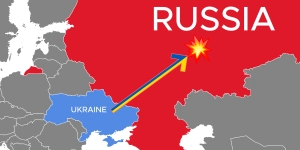

Building grand ambitions for the future requires deep pockets and steady priorities.
When budgets grow tight, even a government’s favorite high-tech dreams can suddenly take a back seat to immediate demands.
Everyday businesses end up paying the ultimate price.
Trimming the future
The Russian government recently slashed federal funding for eight of its top domestic technology initiatives.


According to the Kyiv Post, an analysis by the Moscow think tank CMASF revealed that overall allocations dropped by nearly 38 percent. The state redirected these vital resources toward military spending as fiscal deficits expanded.
Space technology suffered the worst hit, losing its entire scheduled budget for the year. At the same time, domestic robotics and industrial automation projects saw their funding plummet by more than 75 percent, falling to just $152.2 million.
Other key initiatives, including health preservation, food security, and advanced nuclear energy, also suffered heavy budget contractions.
Drones take priority
Only one major high-tech initiative avoided the chopping block. The state actually boosted spending on its military drone development program, setting aside roughly $460.5 million.
Massive shortfalls in state revenue forced these dramatic financial shifts. Despite imposing new corporate and income taxes last year, government revenues missed targets by almost $38.7 billion.
Defense spending continues to devour huge portions of the federal budget. The Moscow think tank noted that military operations consumed half of all federal spending during the first quarter, pushing the budget deficit to $73.5 billion.
“The execution of the 2025 federal budget shows how vulnerable complex investment projects remain when budget parameters are revised,” CMASF concluded in its analysis.
Civilian factories suffer
This heavy financial shift toward defense is deeply damaging the civilian economy.
A report by Ukrainian intelligence indicates that military plants are monopolizing local workers by offering inflated wages. Civilian enterprises simply cannot compete with state-funded paychecks.
While official Russian statistics report average monthly wages around $1,460, banking data shows the real median wage sits closer to $900. High pay in defense and energy masks wage stagnation across healthcare, education, and consumer manufacturing.
The labor crisis has already claimed prominent casualties. Russia’s largest clothing retailer, Gloria Jeans, shut down its domestic assembly lines because it could no longer staff its factories.
Now, the company relies entirely on imported apparel to stock its stores.



