Kenneth Glad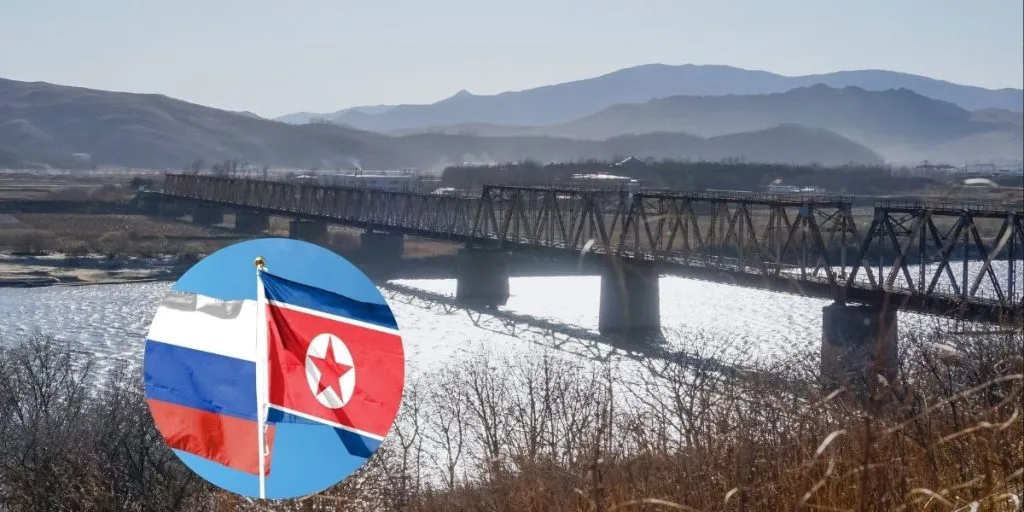
A new cross-border project highlights evolving cooperation between neighboring states. Officials say the development could influence regional connectivity and economic interaction.


Russia and North Korea have moved a step closer to opening a new land route between them, as both countries continue to operate under heavy international sanctions.
The project highlights a steady rise in cross-border exchanges, from trade contacts to political coordination.
The Moscow Times reported that officials from both sides met Tuesday to mark the joining of a road bridge over the Tumen River, which separates Russia’s Far East from North Korea. The crossing is scheduled to open later this summer.
For decades, options here were minimal. A single rail bridge handled nearly all direct movement between the two countries, limiting both trade volume and travel.


A border long defined by limited access
That is beginning to change. Contacts between Moscow and Pyongyang have expanded since 2022, particularly in logistics, political dialogue and reported military cooperation.
Western intelligence agencies have alleged that North Korea has supplied munitions to Russia. Neither government has confirmed this.
Still, analysts cited in international reporting suggest such exchanges could involve economic aid or technical assistance flowing the other way.
Economic pressures shaping cooperation
South Korea has voiced concern about these developments. The Moscow Times writes that officials in Seoul said backing from Russia and China is helping North Korea stabilize an economy long constrained by sanctions.
Russian officials have presented the bridge as a civilian asset. The Foreign Ministry said it “goes far beyond a purely engineering task,” adding that it will support “trade, economic and humanitarian exchanges,.
Capacity remains limited. Government figures cited by the independent Moscow outlet suggest the route can handle about 300 vehicles and up to 2,850 people per day.
By global standards, that is modest. But for this border, it is a noticeable increase.
A small project with broader implications
It may not transform trade overnight. But it creates another opening.
The addition of a road link broadens transport options alongside the existing rail connection near the tri-border area with China.
Even incremental changes like this can matter when alternative routes are scarce.
What stands out is not the size of the project, but its timing. As sanctions continue to restrict access to global markets, both countries appear to be building smaller, direct connections where they can.
For now, the bridge is a practical upgrade. Its real significance will depend on how actively it is used and whether cooperation between Moscow and Pyongyang continues to deepen in the months ahead.
Sources: The Moscow Times